Understand Tradition vs. Trend & What Classic Barbershop Means | Classic Barber Shop NYC
Classic Barbershop Meaning & Tradition vs. Trend
In a city like New York, "new" is everywhere. Every week, a trendy "studio" or "grooming lounge" opens up with neon signs, industrial concrete floors, and a menu of services that sounds more like a chemistry lab than a haircut. But as you walk past the spinning red, white, and blue poles of Classic Barber Shop, you feel something different. It’s a pull toward something permanent.
I get asked all the time by guys who are new to the city: "What is the actual classic barbershop meaning?" Is it just about having old chairs and some wood paneling?
The truth is, "classic" isn't a decor choice; it’s a philosophy. It’s the difference between being a "customer" and being a "client." As a barber who has seen trends come and go like the seasons in Central Park, I want to explain why the traditional approach at a classic barber shop in NYC isn't just about nostalgia, it’s about a standard of excellence that trends simply can't touch.
The Foundation: Craftsmanship Over Speed
In a trendy salon, the goal is often "volume," get the person in, follow a template, and get them out. The "classic" approach is the opposite. It’s rooted in the Classic Barbering Concept, where we view the haircut as a piece of architecture.
When we talk about classic techniques, we’re talking about scissor-over-comb work, the steady hand required for a straight-razor neck shave, and the ability to taper a neckline so perfectly that it grows out seamlessly over three weeks. Trends focus on what looks "edgy" for a photo; tradition focuses on what looks sharp in a boardroom, a bar, and a mirror every morning.
The Ritual: The Hot Towel and the Lather
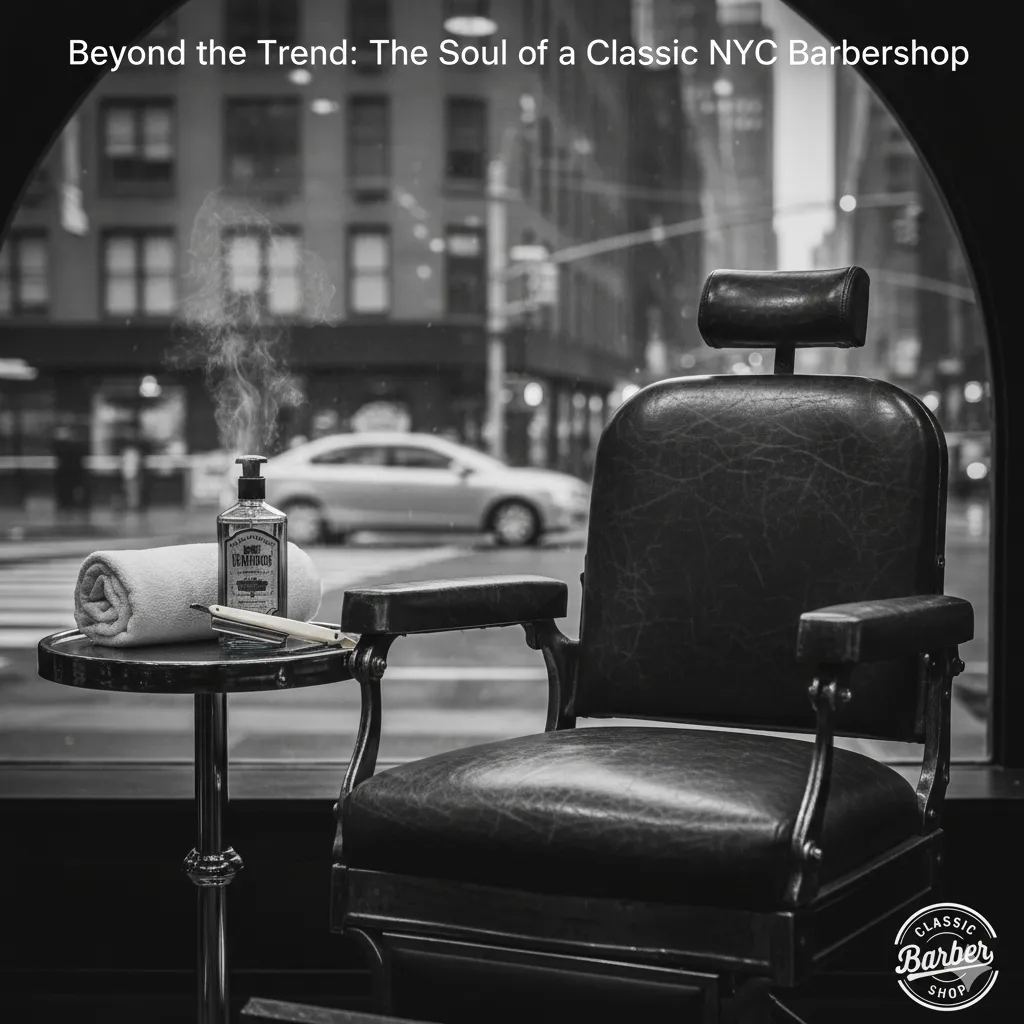
One of the hallmarks of a true classic barbershop is the ritual. To us, a shave isn't just a utility; it’s an experience.
If you go to a trendy shop, you might get a quick electric shave. But at a classic shop, you get the hot towel, the steam opening your pores, the scent of eucalyptus or sandalwood, and the warm lather applied with a brush. This isn't "extra"; it’s the standard. It’s a moment of silence in a city that never stops. This ritual is why men have been coming to the barber for centuries—not just to look better, but to feel centered.
The Community: The Original Social Network
Long before social media, the barbershop was the "third place." It wasn't home, and it wasn't work; it was where you went to hear the real news of the neighborhood.
In a classic barber shop in NYC, the conversation is part of the service. You’ll hear debates about the Knicks, the best pizza in the borough, and advice on everything from career moves to first dates. A "trendy" shop can feel cold and impersonal, a place where everyone is on their phone. A "classic" shop is where you put the phone down and join the room. That sense of belonging is a core part of the classic barbershop meaning.
Tradition Doesn't Mean "Outdated"
Being a classic shop doesn't mean we’re stuck in 1950. At Classic Barber Shop, we use the best modern tools and keep up with the latest techniques in texturizing and fading. The difference is that we filter those trends through a lens of tradition. We ask, "Will this still look good in ten years?" We prioritize longevity, symmetry, and your personal identity over whatever is "viral" this week. We believe that a man’s style should be an extension of his character, not a costume.
Check these 5 Top Hair Trends for Men in NYC
FAQs
What is the definition of a classic barbershop?
A classic barbershop is a community-focused establishment specializing in traditional men's grooming services like precision haircuts and straight-razor shaves. It is defined by its focus on craftsmanship, the use of time-tested techniques (like hot towels and shears), and its role as a social hub for local residents.
What makes a haircut "classic" vs "modern"?
Classic haircuts, such as the Side Part, Crew Cut, or Ivy League, are defined by structured shapes and clean lines that emphasize natural features and are easy to maintain. Modern haircuts often embrace bold asymmetry, disconnected undercuts, and heavy texturizing that may require more daily styling and frequent maintenance.
Why are traditional barbershops becoming popular again in NYC?
The resurgence is driven by a desire for authenticity and personal connection in an increasingly digital and fast-paced world. Men are moving away from the "assembly-line" feel of chain salons in favor of the specialized skill, ritual, and community atmosphere that only a traditional barber can provide.
What is the difference between a barber and a hairstylist?
Barbers are specifically trained and licensed in short-hair techniques, clipper mastery, and facial shaving with straight razors. Stylists typically focus on longer hair, chemical treatments, and coloring. A classic barber understands the specific anatomy of the male skull and jawline to create more masculine silhouettes.
Is a "fade" considered a classic or modern haircut?
While the "Skin Fade" is often seen as modern, the concept of fading or "tapering" hair is a foundational classic technique. A well-executed taper fade has been a staple of professional grooming for decades, providing a clean, polished look that never goes out of style.
Find Your Place in the Tradition
Whether you’re a lifelong New Yorker or you just landed at JFK, you deserve a grooming experience that treats you like a person, not a number. Experience the difference between a "trend" and a "classic."
Would you like me to book you for a "Classic Grooming Experience" this week, including our signature hot-towel shave, so you can see for yourself why tradition always wins in NYC?
